


Table of Contents
- Start with a Safety Checklist for Baby Gear
- How to Check for Baby Product Recalls
- Decode Certifications and Safety Standards
- Avoiding Endocrine Disruptors in Baby Care
- Non-Toxic Baby Registry Essentials
- Second-Hand Safety Protocols and Budget Testing
- Frequently Asked Questions
Last Updated: September 21, 2026
Start with a Safety Checklist for Baby Gear
Learning how to choose safe baby products starts with a simple shift in mindset: inspect the item before you inspect the price tag. Safe baby products are items that meet current federal safety standards, carry verifiable third-party certification, and have no active recall history. Parents should run every purchase through the same short checklist, whether it's a crib, a carrier, or a bottle warmer.

Here's the checklist we recommend:
- Check for a Juvenile Products Manufacturers Association (JPMA) certification seal
- Confirm the product meets Consumer Product Safety Commission (CPSC) standards for its category
- Search the CPSC recall database for the brand and model number
- Look for stability features like locking mechanisms and anti-slip bases
- Verify age recommendations match your child's developmental stage
- Scan for suffocation hazards: gaps, soft bedding, and loose parts
- Confirm materials are labeled low-emitting, BPA-free, or food-grade silicone
How to Check for Baby Product Recalls
Checking for baby product recalls takes about two minutes and should happen before you buy, not after. The Consumer Product Safety Commission recall database lets you search by product name, brand, or model number, and it's the same database retailers use to pull unsafe inventory.
Decode Certifications and Safety Standards
Certifications tell you a product passed independent testing, not just the manufacturer's own claims. The two labels worth knowing are the JPMA seal, which verifies a product meets specific safety standards for its category, and CPSC compliance, which is required by law for items like cribs, car seats, and infant carriers. You can review the underlying rules through the CPSC regulatory compliance guidance.
| Certification | What It Verifies | Where You'll See It |
|---|---|---|
| JPMA seal | Meets category safety standards | Cribs, strollers, high chairs |
| CPSC compliance | Meets federal mandatory rules | Car seats, carriers, cribs |
| Food-grade silicone label | Safe for mouth contact | Teethers, bottle parts |
| Low-emitting / GREENGUARD | Limits volatile organic compounds | Cribs, mattresses, furniture |
Mandatory rules vs. voluntary seals
The distinction that trips up most parents: CPSC compliance is the floor, not a bonus. Federal mandatory standards already cover cribs, bassinets, play yards, infant carriers, car seats, strollers, and toys, which means any of those items sold new in the U.S. is legally required to meet them. A JPMA seal is different, it's a voluntary program where the manufacturer submits the product for testing against the applicable standard.
What the standards actually test
- Cribs and bassinets: slat spacing, mattress support strength, hardware integrity, and a ban on drop-side designs. Cribs must also carry a registration card so you can be reached if a recall is issued.
- Car seats: frontal and side impact performance, harness strength, and labeling. Every seat sold must be certified for use in a motor vehicle and meet Federal Motor Vehicle Safety Standard 213.
- Infant carriers and slings: structural integrity, restraint systems, and warning labels about suffocation risk in soft carriers.
- Toys: small-parts choking hazards for children under three, sharp edges, and lead and phthalate limits in surface coatings and plastics.
How to verify a claim
A seal on a box is a starting point, not proof. Check the manufacturer's site for the specific standard cited, confirm the model number matches the one on the certification listing, and cross-reference the CPSC recall database. If a brand claims "meets all safety standards" without naming the standard or the testing body, treat that as marketing language.
The eco-label trap
This is where sustainability marketing and actual safety diverge. Terms like "eco-friendly," "green," and "non-toxic" are not regulated certifications, they're marketing. A product can be marketed as eco-friendly and still contain flame retardants or phthalates. When you see an environmental claim, look for the specific certification behind it (GREENGUARD Gold for low emissions, for example) rather than the adjective. If the claim has no certification attached, it tells you nothing about safety.
Avoiding Endocrine Disruptors in Baby Care
Endocrine disruptors are chemicals that can interfere with hormone function, and they show up in baby care items more often than parents expect. The usual suspects are phthalates in soft plastics, BPA in older hard plastics, and flame retardants in foam padding and some textiles. Avoiding endocrine disruptors in baby care comes down to reading labels closely and choosing materials with a known safety profile.
Non-Toxic Baby Registry Essentials
Non-toxic baby registry essentials are the items worth prioritizing for material safety, because they're the ones your baby contacts daily. Focus your registry on the products that spend the most time against skin or in the mouth, and don't overthink the rest.
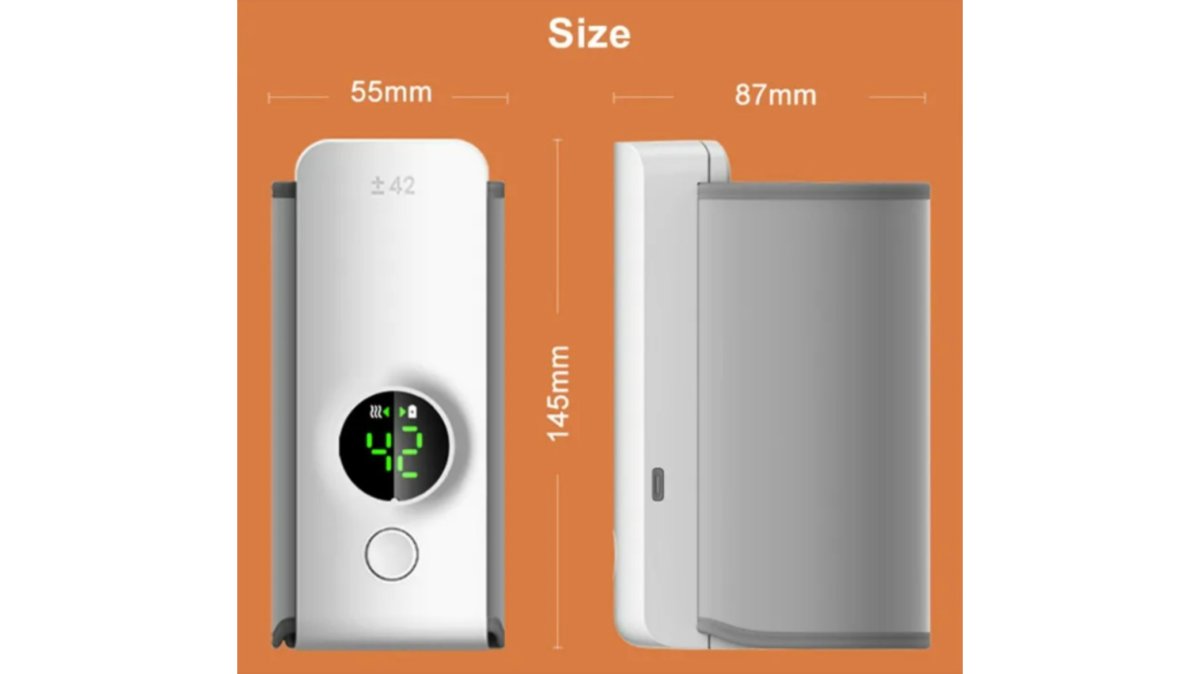
Portable Wireless Baby Bottle Warmer →
Priority items:
- Crib and mattress with low-emitting certification
- Food-grade silicone bottles, teethers, and pacifiers
- Organic cotton crib sheets and swaddles
- Fragrance-free, hypoallergenic washes and lotions
- A carrier with breathable fabric and adjustable, secure fit
Second-Hand Safety Protocols and Budget Testing
Second-hand gear can be perfectly safe, but it needs a different inspection than new items. The rules that matter most: never accept a second-hand car seat unless you know its full history, skip any crib made before current safety standards took effect, and check every item against the recall database before it enters your home.
Category-by-category rules
- Car seats, buy new. A seat has a limited safe lifespan because the plastic shell and harness webbing degrade over time, and impact performance after even a minor crash can't be verified. Most manufacturers print an expiration date on the shell; if you can't find one, don't use the seat. Never use a seat that has been in a crash, even a fender-bender, and never use one with an unknown history.
- Cribs, check the date and design. Drop-side cribs are banned and should never be used or resold. Any crib made before the current mandatory standard took effect should be skipped. Look for the manufacturer's label with the model number and date of manufacture; if it's missing, walk away.
- High chairs, strollers, and carriers, inspect hard. Check for missing straps, cracked plastic, worn harness webbing, and locking mechanisms that don't fully engage. A stroller that folds unexpectedly or a high chair with a broken restraint is a fall hazard regardless of how it looks.
- Foam-containing items, be cautious. Crib mattresses, car seat padding, and nursing pillows with foam can contain flame retardants, and older foam breaks down into a crumbling texture that's a choking and inhalation risk. If the foam is disintegrating, replace the item.
- Clothing, washable fabrics, and hard toys, reuse freely. These are the safest categories to pass down. Wash everything before use.
Budget-friendly safety testing you can do at home
You don't need a lab to catch the most common failure points. Here's how to vet used gear without spending much:
- Recall check first. Search the CPSC recall database for the exact model number before you even inspect the item.
- The stability test. Place the item on a hard floor and apply gentle pressure to the edges and joints, a high chair, bouncer, or seat should not tip or wobble. Push down on the seat edge the way a toddler would lean.
- The hardware test. Tighten every screw and bolt, then re-check after a few minutes. If fasteners won't stay tight, the threads or inserts are stripped.
- The strap and webbing test. Flex the harness and straps; look for fraying, stiffness, or faded dye that suggests UV degradation. A strap that has lost its give is a restraint failure waiting to happen.
- The surface test. Run a damp white cloth over painted or finished surfaces. If paint transfers, the finish is failing and may indicate a lead or coating concern on older items.
- The parts check. Confirm no aftermarket paint, glue, or repairs were applied, a repaired joint is a structural unknown.
- The wash. Machine-wash all removable fabrics in fragrance-free detergent and air-dry before use.
The sustainability-versus-safety trade-off
There's a real tension here that most guides gloss over. Reusing gear keeps items out of landfills, and for clothing, furniture, and washable items the safety case for reuse is strong. But some categories, car seats especially, have a limited safe lifespan because plastic degrades and impact performance can't be verified after a crash. The honest rule: buy new for the items that protect your child in motion, and reuse freely for everything else.
Frequently Asked Questions
What certifications should I look for on baby products?
Look for third-party certifications like Juvenile Products Manufacturers Association (JPMA) certification, GREENGUARD Gold for low-emitting products, and EWG Verified for personal care items. These programs test for safety standards, chemical exposure, and material safety. For car seats, check for FMVSS 213 compliance. Always verify the certification is current and applies to the specific product model.
Are there specific chemicals to avoid in baby products?
Avoid products containing phthalates, BPA, flame retardants, and volatile organic compounds (VOCs). These chemicals are linked to endocrine disruption and developmental issues. Choose items labeled phthalate-free, BPA-free, and low-emitting. For personal care, skip fragrances and parabens. Look for organic cotton or food-grade silicone alternatives.
How do I know if a baby toy is safe?
Check for age-appropriate labeling, small parts that could pose choking hazards, and sharp edges. Look for non-toxic paints and materials, and ensure the toy has no long strings or cords that could cause strangulation risks. Verify the toy meets ASTM F963 safety standards. Also, check for product recalls on the Consumer Product Safety Commission (CPSC) website.
How can I check if a baby product has been recalled?
Visit the CPSC website at cpsc.gov and search the product name or model number. You can also sign up for recall alerts. Check the manufacturer's website for recall notices. For second-hand items, always check recalls before use. If a product is recalled, stop using it immediately and follow the manufacturer's instructions for a refund or repair.


